
1908 – 1917: Paris, 4 avenue Carnot
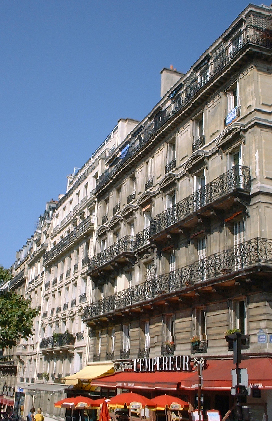
The avenue Carnot was the grandest address that Ravel ever had. It certainly marked a significant social change from the rue Chevallier. Avenue Carnot is one of the broad streets that radiate from the Place de l’Étoile, and no.4 is only a few yards from the Arc de Triomphe.
Ravel expressed his delight at the move in one of his letters to the Godebskis: “…une vue magnifique, un appartement délicieux, tout prêt, même l’électricité.;” (Orenstein [1989], letter 57, nov. 1908).
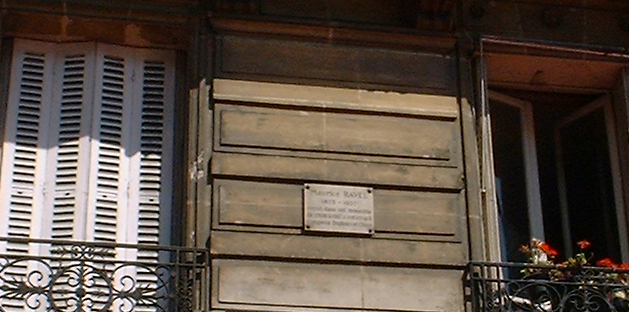
He composed some of his major works at this address: Ma mère l’oye, Valses nobles et sentimentales, Trois poèmes de Stéphane Mallarmé, and his ballet Daphnis et Chloé (the last of these being mentioned on the plaque which is now on the front of the building.
During 1913 and 1914 Ravel spent a good deal of time in St. Jean-de-Luz, composing amongst other things his Trio. When the war broke out, he was eager to enlist (preferably in the airforce) and frustrated when he was rejected for military service for being underweight. His determination continued and he was at last accepted as a private in the artillery in March 1915, and was trained as a driver before being sent to the Western front near Verdun in March 1916.
After an accident and a serious illness, it was only in November 1916 that he returned to Paris. He was with his mother at avenue Carnot when she died on 5 January 1917.
In the unsettled years which followed, Ravel stayed at various addresses, in and out of Paris.